
Many buyers look at supercars as an investment, and it is true that some collector cars have held or increased their value over the years. But not every expensive car becomes a collector’s item, and values can also fall. In this article we explain, in general terms, which factors collectors look at when they judge whether a car is likely to hold its value, starting with the numbers you often see on limited editions: 1/499, 1/40 or 1/6. This is not financial advice: it is a summary of what we see in the market every day.
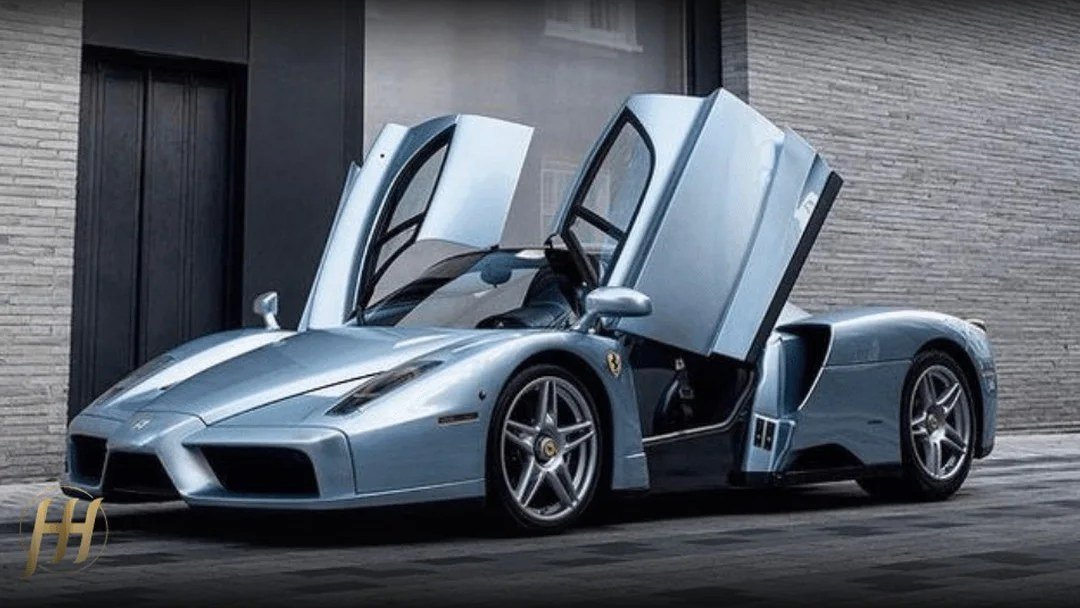
What does 1/499 or 1/6 mean on a supercar?
A number such as 1/499 tells you how many cars of that model or version were made. LaFerrari, for example, was limited to 499 coupés. A number such as 1/6 can refer to an even smaller group, for example the cars built in a specific colour or configuration. Our Ferrari Enzo in Grigio Titanio, one of six in that colour, is a good example.
Many limited cars also carry their own number on a plaque inside the cabin or on the engine, such as “number 12 of 40”. This plate is part of the car’s identity. The basic rule is simple: the lower the count, the higher the rarity. Rarity alone does not guarantee value, but it is often the starting point.
Which factors help a supercar hold its value?
Experience shows that the cars that hold value best usually combine several of these qualities:
- Limited production: a small, clearly defined number of cars, announced by the factory.
- Historical importance: a car that marked a moment, such as a record, a new technology or an anniversary.
- Originality: original paint, interior, engine and gearbox, ideally with matching numbers.
- Documented history: a clear ownership chain, complete service records and original documents.
- Desirable specification: sought-after colours, options or packages.
- Condition: a car that has been maintained properly, stored well and never neglected.
Why history and originality matter so much
Two cars of the same model can be worth very different amounts. The difference often lies in the details: whether the car still has its original engine, whether it has been repainted, whether it has complete service records or whether it has had an accident. For classic Ferraris, factory certification such as Ferrari Classiche can confirm that the car is in original specification.

Records and anniversaries can also give a car a clear story. The Veyron Super Sport, linked to the 431 km/h record, and the Ferrari F50, built for Ferrari’s 50th anniversary, are examples of cars whose history is part of their appeal.
Does low mileage always mean more value?
Low mileage is usually positive, but it is not the only factor. A car with very low mileage that has stood for years without proper maintenance may need expensive work. Many collectors prefer a car that has been driven regularly but carefully, with documented servicing, over one that has not moved for a long time. What matters most is the combination of mileage, maintenance and condition.
What are the risks?
It is important to be realistic. Car values can go down as well as up, and the market for special cars can change with the economy, with fashion and with the arrival of new models. Ownership also has costs: storage, insurance, maintenance and transport. A car should be bought first of all because the owner wants to own it. If its value also holds or increases, that is a bonus, not a certainty. For financial decisions, always consult an independent adviser.
Collector cars at Hinsei Hanta
Browse our current inventory of limited and collector cars, or explore brands such as Ferrari. Looking for a specific car, colour or number? Our vehicle sourcing service searches Europe and the rest of the world, and you can talk to Leonardo Braga directly through our contact page.
Frequently asked questions
What does 1/499 mean on a car?
It means the car belongs to a series of 499 examples. Many limited cars also carry their own individual number on a plaque.
Are all limited-edition supercars good investments?
No. Rarity helps, but value also depends on history, originality, specification, condition and market demand. Values can fall as well as rise.
Does mileage affect the value of a collector car?
Yes, but together with maintenance and condition. A well-maintained car with moderate mileage can be preferable to a neglected low-mileage one.
Why are original documents important?
They confirm the car’s history, specification and ownership, which collectors and future buyers want to see before they commit.