
The hybrid Holy Trinity is the name collectors give to three hypercars that arrived at almost the same time, around 2013: the McLaren P1, the LaFerrari and the Porsche 918 Spyder. Each came from a different country and a different engineering philosophy, but all three shared one idea: hybrid power used for performance, not for economy. Together they defined what a modern hypercar is.
Why hybrid power changed the hypercar
Before 2013, hybrid technology in cars was mostly associated with fuel saving. The Trinity turned that image around. Inspired by energy recovery systems in Formula 1 and endurance racing, the three manufacturers used electric motors to fill gaps in the power delivery, sharpen throttle response and add a large boost of performance on top of powerful combustion engines.
The result was a new level of acceleration and responsiveness, and a template that later hypercars have followed. Many of today’s fastest cars use some form of electrification, but these three were the first to make it the centre of a hypercar’s identity. Each manufacturer also chose its own balance between road comfort, track focus and everyday usability.
McLaren P1: the British answer
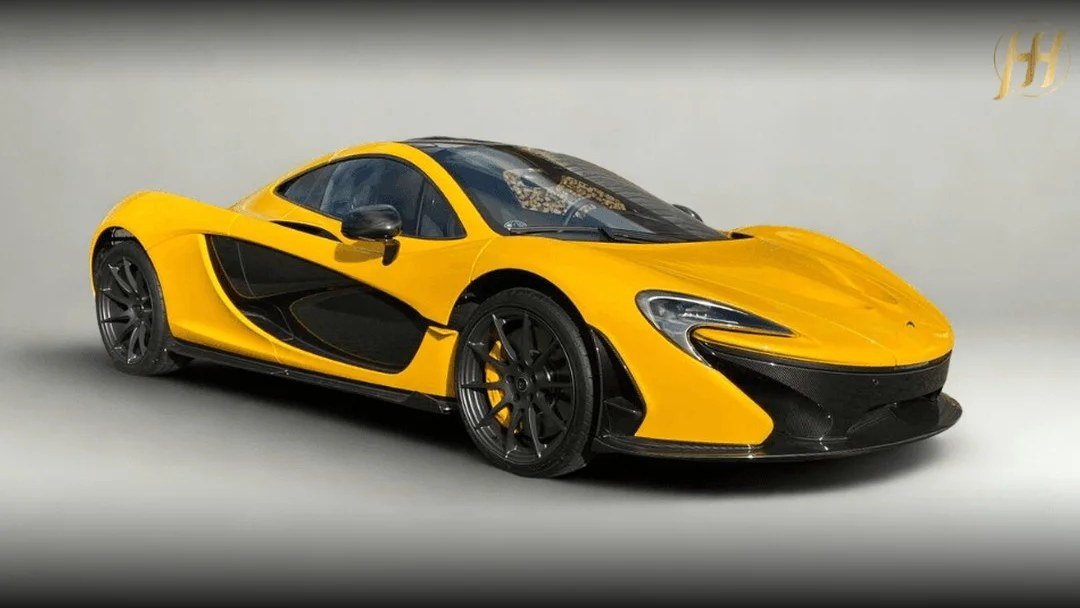
The McLaren P1 was conceived as the spiritual successor to the McLaren F1. It combines a 3.8-litre twin-turbo V8 with an electric motor, for a combined output of 916 PS, and drives the rear wheels. Its active aerodynamics, including a large adjustable rear wing, were inspired by McLaren’s racing experience.
McLaren limited production to 375 cars. The P1 is known for its dramatic, aero-driven design and for how hard it can be pushed on track, while remaining usable on the road.
LaFerrari: the V12 hybrid from Maranello
The LaFerrari uses a naturally aspirated 6.3-litre V12 combined with an electric motor through Ferrari’s HY-KERS system, derived from its Formula 1 experience. Combined output is 963 cv, delivered to the rear wheels. The electric motor fills the torque gaps at low revs, while the V12 provides the top-end power and the sound that defines Ferrari.
Production of the coupé was limited to 499 cars, and an open LaFerrari Aperta followed later in a smaller series. LaFerrari is also the most recent member of Ferrari’s Big Five.
Porsche 918 Spyder: the plug-in pioneer
The Porsche 918 Spyder took a different route. Its naturally aspirated 4.6-litre V8 works with two electric motors, one on each axle, for a combined output of 887 PS and all-wheel drive. Unlike the other two, the 918 is a plug-in hybrid that can also be driven on electric power alone for short distances.
Porsche built 918 cars, a number that matches the name. In 2013 the 918 Spyder became the first production car to lap the Nürburgring Nordschleife in under seven minutes, a clear demonstration of what the hybrid approach could achieve.
The hybrid Holy Trinity at a glance
- McLaren P1: 3.8-litre twin-turbo V8 hybrid, 916 PS, rear-wheel drive, 375 cars
- LaFerrari: 6.3-litre naturally aspirated V12 hybrid, 963 cv, rear-wheel drive, 499 coupés
- Porsche 918 Spyder: 4.6-litre naturally aspirated V8 plug-in hybrid, 887 PS, all-wheel drive, 918 cars
Why the Trinity matters to collectors
For collectors, the three cars form a natural set. They represent the same moment in history, the same turning point in technology and three distinct interpretations of it by three great brands. Owning all three is a goal for a small number of collectors worldwide.
As these cars age, their hybrid systems and batteries make documented maintenance especially important. Service history at authorised specialists, battery health and originality are key points when evaluating any of them.
The Holy Trinity at Hinsei Hanta
Browse our current inventory, including the LaFerrari and the McLaren P1. Read the full story of the McLaren P1 or explore more Porsche models. Looking for a 918 Spyder? Our vehicle sourcing service searches worldwide.
Frequently asked questions
What is the hybrid Holy Trinity?
The McLaren P1, LaFerrari and Porsche 918 Spyder, three hybrid hypercars launched around 2013.
How many of each were built?
McLaren built 375 P1s, Ferrari 499 LaFerrari coupés and Porsche 918 examples of the 918 Spyder.
Which of the three is all-wheel drive?
Only the Porsche 918 Spyder, which uses two electric motors, one on each axle. The P1 and LaFerrari are rear-wheel drive.
Which Trinity car is the most powerful?
The LaFerrari, with 963 cv combined, ahead of the McLaren P1 with 916 PS and the 918 Spyder with 887 PS.